

No products in the cart.

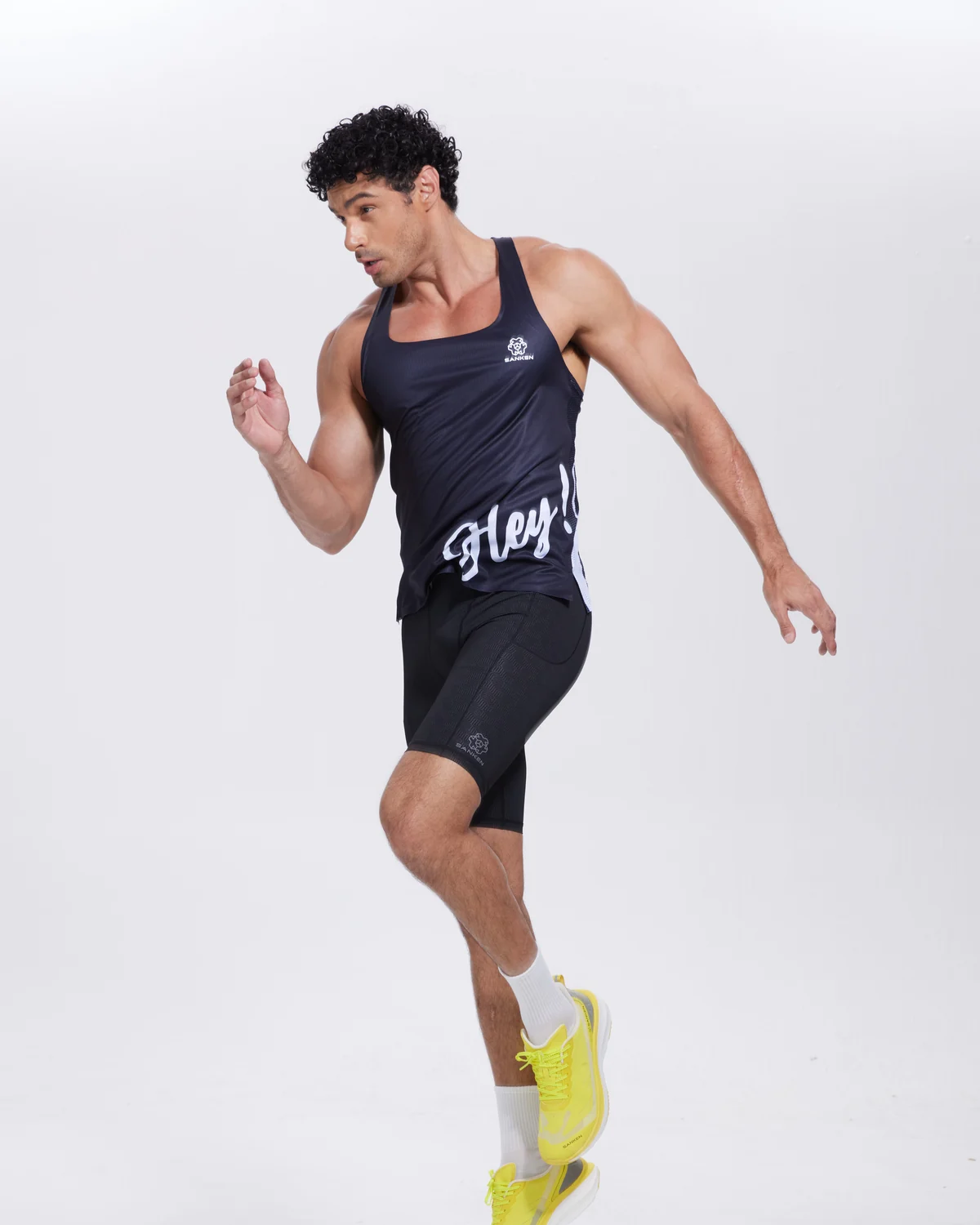
Custom Compression Tights: Compression Levels, Panels and Pocket Placement
Most briefs for compression tights arrive as a single sentence: “like the big brands, but ours.” That sentence hides three separate decisions that determine whether the finished tight feels supportive or merely tight — compression band, panel construction and pocket placement. Get those three right and the rest of the specification is detail. Get them wrong and no amount of fabric quality will rescue the fit.
As a custom compression tights manufacturer, we build tights for running clubs, OCR teams, cycling brands and gym labels. This guide walks through the three decisions in the order they should be made, and explains what to specify so your first sample does not need to be your third.
What “compression” actually means in a running tight
Compression is a graduated pressure: firmer at the calf or thigh, easing as it moves up or down the limb. In practice, most of what the market calls compression falls into three bands. The label on the garment tells you far less than the fabric weight, the panel layout and the stitch type used to join them.
| Band | How it feels | Who it suits | What it demands in production |
|---|---|---|---|
| Light support | Second-skin, no squeeze | Everyday training, gym, yoga | Simple two-panel body, standard flatlock |
| Moderate compression | Noticeably held, comfortable for 60–90 minutes | Road running, OCR, team training | Four to six panels, graduated seam placement |
| Firm compression | Fits like a brace, requires careful sizing | Recovery wear, strength sports | Heavier gauge fabric, reinforced waistband, wider size set |
Two practical warnings before you brief a supplier. First, “firm” is not automatically better — a tight that is uncomfortably firm gets left in the drawer. Second, the difference between bands is largely decided by fabric weight and panel geometry, not by marketing language. If a brief says “maximum compression” without a size set or a fabric weight, the specification is not finished.
Panel construction: where the seams go and why
Panels exist to do three jobs: shape the leg, control where stretch happens, and move seams away from friction points. A typical moderate-compression running tight uses four to six panels:
- Front thigh panel — the main stretch zone; its grain direction controls how the knee lifts.
- Back thigh and seat panels — shaped for flexion, usually with a centre seam or a gusset.
- Knee panel — either articulated with a seam behind the knee, or left smooth depending on the brief.
- Calf panel — where graduated pressure is easiest to control.
- Gusset — the single most common upgrade request from female buyers.
- Waistband — separate construction, not just a folded hem.
Seam type matters as much as seam position. Our compression tights range uses flatlock on body seams because it lies flat against the skin and stretches without cracking; overlock is faster but creates a ridge that becomes a rub point over 20 km. If you are comparing constructions, our guide to seam choices on running shorts covers the same trade-off in shorter garments.
Opacity and squat-proofing
Opacity is a fabric and gauge question, not a design question, and it is the number one complaint on light-coloured tights. Two practical rules: specify a heavier gauge for pale colourways than for black, and always approve a sample in the actual colour going to production rather than approving black and ordering lilac.
Pocket placement: the detail buyers ask about most
Five years ago most custom tights had no pocket. Today it is the first question from club buyers, because a runner carrying a phone in a waistband is a runner who will not reorder.
| Pocket type | Capacity | Effect on fit | Best for |
|---|---|---|---|
| Rear waistband zip pocket | Keys, card, gel | Minimal | Race day, minimal bulk |
| Side thigh pocket (stretch mesh) | Phone up to large format | Adds a panel; needs a firmer opening to stop bounce | Training, commuting |
| Rear centre pocket | Phone, horizontally or vertically | Interferes with centre seam; needs careful placement | Cycling-influenced designs |
| Waistband envelope pocket | Gel, keys | None, but limited capacity | Low-cost addition |
Placement matters more than size. A thigh pocket works when the opening sits slightly forward of the side seam and the base is anchored by the panel below it; put it directly on the side seam and the phone swings. If you are also producing running singlets or compression leg sleeves, decide early whether the carry system lives on the tights or the top so you are not duplicating weight.
Building a size set that holds compression
This is the stage where a custom compression tights manufacturer earns or loses the account. A common early mistake is ordering a single sample size and extrapolating. Compression garments are far less forgiving of grading errors than loose tops, because a centimetre in the wrong place changes the pressure band the whole product is sold on.
- Decide the target band for each size before sampling.
- Build a size set across at least three sizes, with a fit model per size.
- Check the tight at the top and bottom of each size, not just the middle.
- Confirm that the waistband holds without a drawcord before adding one.
Our sampling window is 5–7 days and our minimum order is one piece, so a size set does not have to be a large commitment — but it does have to happen before a bulk run.
Fabric weight and gauge: the spec that decides everything
Fabric weight is the quiet variable behind almost every compression complaint. A tight that feels supportive in the sample room and sloppy after ten washes usually has a weight problem, not a sewing problem.
As a working rule, light support sits around the lighter end of performance jersey, moderate compression needs a heavier gauge with a higher elastane content, and firm compression needs both plus a reinforced waistband. The exact numbers vary by mill, so the practical move is to specify the feel you are targeting — light, moderate or firm — and confirm the weight in writing on the order sheet rather than assuming.
Two related points worth writing into the brief:
- Stretch recovery matters more than stretch percentage. A fabric that stretches well but recovers slowly becomes a loose tight by mid-season.
- Gauge and opacity are linked. The lighter the gauge, the more the colour choice affects what shows through.
Waistband, rise and the details that generate returns
The waistband is the most returned component on custom tights, and it is almost always a construction decision rather than a sizing one.
| Waistband type | Holds without drawcord | Comfort over distance | Typical fit |
|---|---|---|---|
| Elastic-only | Usually yes | Digs in on longer runs | Low-cost training tight |
| Wide elastic with silicone grip | Yes | Good; grip stops roll-down | Most running tights |
| Contoured panel waistband | Yes | Best, but costs more to cut | Premium and club kit |
| Drawcord added to any of the above | N/A | Depends on the base band | Insurance, not a substitute |
Rise is the second quiet cause of returns. A high rise flatters a broader range of body shapes but changes where the side pocket sits; a low rise suits race kit but leaves no room for a phone pocket. Decide the rise first, then place the pocket around it — not the other way round.
Sizing is the third. Because a compression tight cannot be “let out”, the difference between two adjacent sizes needs to be small enough that nobody falls between them. That is a grading decision made at development, and it is worth reviewing with a fit model before the bulk run rather than after.
Frequently asked questions
What compression level should a running club order?
Moderate compression suits most road and team running. Firm compression is better positioned as recovery wear, where the tighter fit is worn for shorter periods and comfort over 90 minutes matters less.
Can you produce tights with a phone pocket without changing the fit?
Yes, but it is a panel change rather than an add-on. A pocket needs an anchor panel and a firmer opening to stop movement, so it should be specified at development rather than added after sampling.
Do you supply a separate compression leg sleeve instead of full tights?
Yes — see our running accessories range. Many clubs order both, using sleeves for warm-weather training and full tights for winter.
What is the minimum order for custom compression tights?
One piece. Sampling runs in 5–7 days and production ships in 15 days after approval.
How do I approve the right colour for a light-coloured tight?
Approve a sample in the exact production colour, on the exact fabric gauge. Approving black and then ordering a pale colourway is the most common cause of opacity complaints.
Start with a sample, not a bulk order
Send us the compression band you are aiming for, the pocket layout you need and the size range you intend to sell. Choosing a custom compression tights manufacturer is really a question of who will push back on an incomplete brief, so tell us what you have and we will tell you what is still missing. We will come back with a panel plan and a sample timeline. Browse the compression tights page or the gallery for reference constructions, then request a quote with your specification.