

No products in the cart.

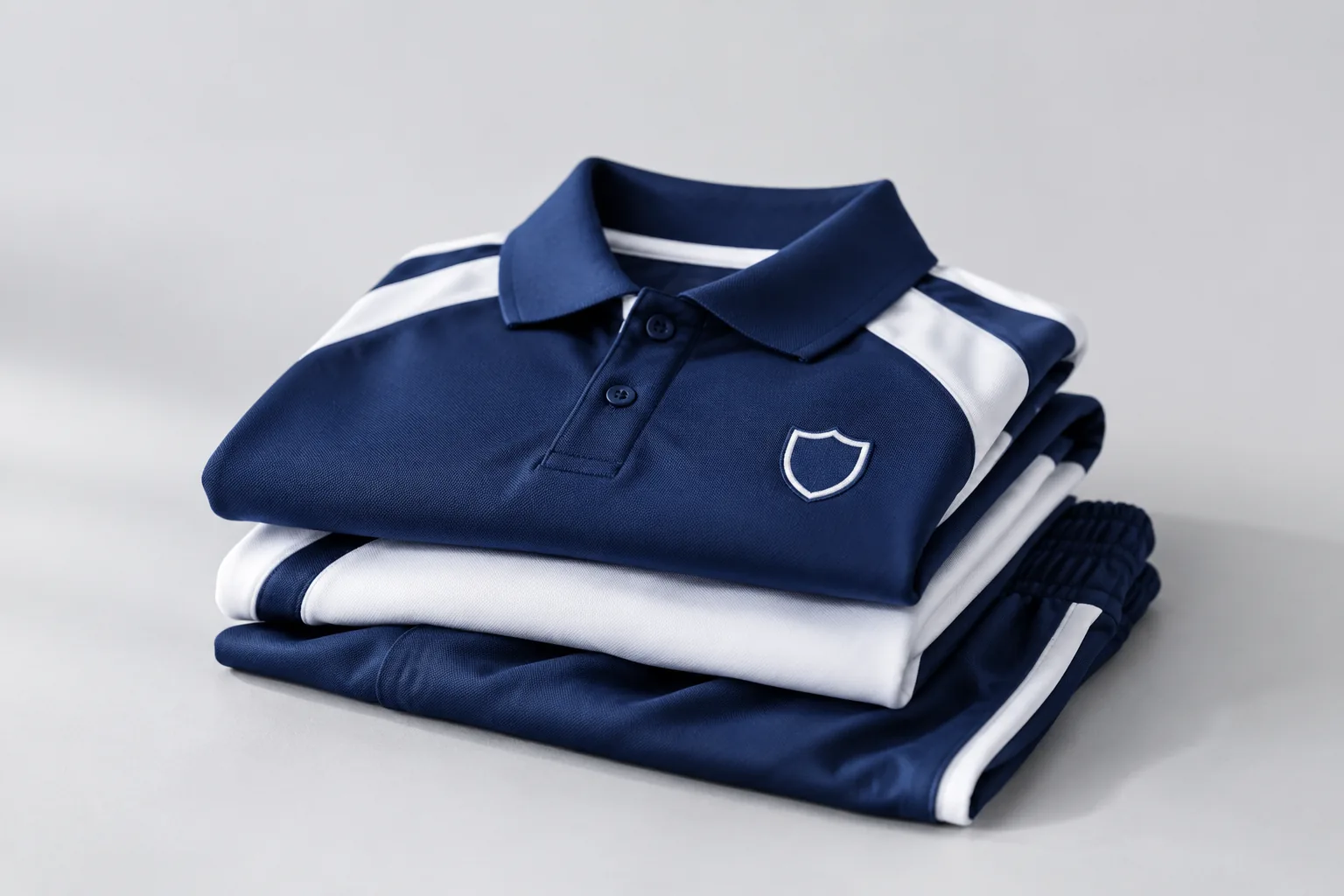
Custom Team Kit vs Retail Kit: Six Differences That Decide Replacement
A club secretary opens a catalogue, finds a polo in the right colour, orders thirty, and the squad looks fine on day one. Two seasons later half the players are wearing a slightly different shade, three shirts have lost their crest, and the two players who joined late are in a garment the supplier no longer stocks. Nobody did anything wrong. The purchase was simply never designed to be repeated.
That is the real difference between buying a retail kit and commissioning a custom team kit. It is not mainly about looks, and it is not mainly about unit price. It is about what happens in season two, season three, and the week a new player arrives. Below are the six differences that decide it, and the one area where retail genuinely wins.
Reframe the comparison around replacement, not price
A retail kit is priced per garment at the moment of purchase. A commissioned kit is priced across its whole life, which includes the second order of eight shirts, the replacement for the player who tore a sleeve, and the staff time spent chasing both.
Once you look at it that way, the questions change. Instead of “which is cheaper”, you are asking “can I get the same garment again in fourteen months”. That question is where retail and custom diverge most sharply, and it is the one most clubs forget to ask before signing. It is also the question a custom team kit exists to answer: the point of commissioning rather than buying is that the garment can be produced again from a written specification instead of being found again by luck.
| Dimension | Retail kit | Custom team kit |
|---|---|---|
| Fit range | Whatever sizes remain in stock | Pattern graded to your roster, including odd sizes |
| Fabric | Named by marketing, rarely by weight | Specified in GSM and composition, repeatable |
| Decoration | Heat transfer applied after manufacture | Chosen for the substrate, applied during or after production |
| Colour consistency | Depends on dye lot and restock timing | Controlled at lab dip, reorderable from the approved recipe |
| Reorder | Discontinued without notice | Pattern and spec held on file |
| Minimum quantity | One piece | From one piece upward |
Fit: one size run instead of scattered stock
Retail sizing assumes a body. When your roster includes a 165 cm player and a 195 cm player, the same nominal size behaves very differently on each. Retail solves this by offering more sizes, but only the ones the buyer chose to stock, and only until they sell through.
A custom team kit starts from a size run you define. If four players need a longer body than the standard grade allows, that is a pattern note, not a compromise. The same applies to sleeve length on a custom polo or leg length on running shorts — both are specified before cutting rather than negotiated after delivery.
Fabric specification: the thing you can name and repeat
Ask a retail supplier what the fabric weighs and you will usually get a composition percentage and a marketing word. Ask a factory and you get a number in GSM, a knit structure, and a hand-feel reference.
That matters because weight is the single most useful lever on how a garment performs. A 150 GSM knit and a 180 GSM knit can look identical on a hanger and behave completely differently after ten washes and a hard season. If you never named the weight, you cannot reorder it — you can only hope. Our guide to fabric weight and GSM covers how the numbers translate into wear.
Decoration durability over a season
Retail decoration is usually applied to a finished garment with a method chosen for cost and speed. On a crest that will be washed thirty times, that choice is the difference between a mark that stays crisp and a mark that crazes.
On a commissioned kit the decoration method is matched to the fabric and to the design, and the curing is part of the production control rather than an afterthought. There are eight methods in common use, and picking between them is a substrate question more than a preference question — the detail lives in our printing and decoration reference.
Colour and logo consistency across the squad
This is the difference players notice first, because it is visible from the sideline. Retail kits bought in two batches can differ by a visible step, and no amount of care fixes it after the fact.
With a custom team kit, colour is approved once — usually as a lab dip or a strike-off — and that approved reference governs the run. It also governs the reorder, which is the point most clubs only appreciate in year two. The mechanics of holding a colour across seasons are covered in reorders and colour consistency.
Reordering the same garment next season
Retail assortments rotate. The polo you bought in March is often gone by September, replaced by a variant with a different collar and a slightly different blue. For a club that adds players every season, that is a structural problem, not bad luck.
A custom team kit is built to be reordered. The pattern, the fabric specification, the colour reference and the decoration file all stay with the order. A reorder of eight pieces is a normal transaction rather than a search. This is the reason many clubs move to custom after their second retail cycle rather than their first — the first purchase looks fine, and the second one exposes the gap.
Where retail still wins
It would be dishonest to pretend custom wins everywhere. Retail wins on immediacy: if you need twenty shirts this week, custom production will not deliver them. Retail also wins when the kit is a one-off for a single event and nobody will ask for it again, and when the design is genuinely generic enough that any supplier’s version will do.
The honest test is simple. If you expect to need this garment again, in the same colour, with the same crest, and you expect the roster to change, custom is the lower-risk route. If you need it once and soon, retail is the correct answer.
A decision checklist before you order
- Write down the exact size range you need, including the two extremes.
- Name the fabric in GSM and composition, not in adjectives.
- Decide the decoration method per placement, not per garment.
- Ask how a reorder of ten pieces would be handled in fourteen months.
- Confirm what minimum applies, and whether a mixed-size run is allowed inside it.
- Ask what the approved colour reference will be, and who holds it.
If a supplier cannot answer the fourth and sixth questions without checking, that tells you something useful about the second season. Our custom team kits page sets out how those answers are documented on our side, and the gallery shows finished club work.
Frequently asked questions
Is a commissioned kit more expensive than retail?
Per garment, often yes at small quantities, because you are paying for specification and setup rather than for a stocked item. Across several seasons and reorders, the comparison usually reverses, because you are not replacing garments that were discontinued or that faded unevenly.
Can we order a mixed size run in one batch?
Yes. A size run is the normal way clubs order, and the minimum applies to the batch rather than to each size. That is what makes a squad of thirty with six sizes workable.
What if our roster changes after the order?
Order a small buffer in the two most common sizes. Beyond that, the pattern stays on file, so adding players later is a small reorder rather than a new project.
Can we match an existing club colour?
Usually yes. Send the garment you want matched, or a Pantone reference, and the colour is confirmed on a lab dip before bulk. Matching from a photograph alone is unreliable, because screen and print colour do not correspond.
How long does the first order take?
Sampling typically runs five to seven days, and production around fifteen days after approval, depending on quantity and decoration. The first order always includes an approval step that a retail purchase does not.
Decide with your roster in front of you
The comparison is easier than it looks once you stop comparing garments and start comparing what you will need in two years. Send us your size range, your colour reference and your decoration plan, and we will tell you which parts of the kit are worth specifying and which are not. Start with the team kit overview, or request a quote with your roster attached.