
No products in the cart.

Custom Running Shorts: 2, 3 or 5 Inch Inseam and What Teams Actually Order
Short answer first: most running clubs settle on a 3 inch inseam, brands building a retail range lean toward 5 inch, and 2 inch is reserved for race-day split shorts. The length decides the liner, the pocket set and the panel layout, so a custom running shorts manufacturer will confirm it before quoting.
This guide covers what each length changes, which lengths teams order, and how to write the decision into a tech pack.
What Inseam Measures — and What It Does Not
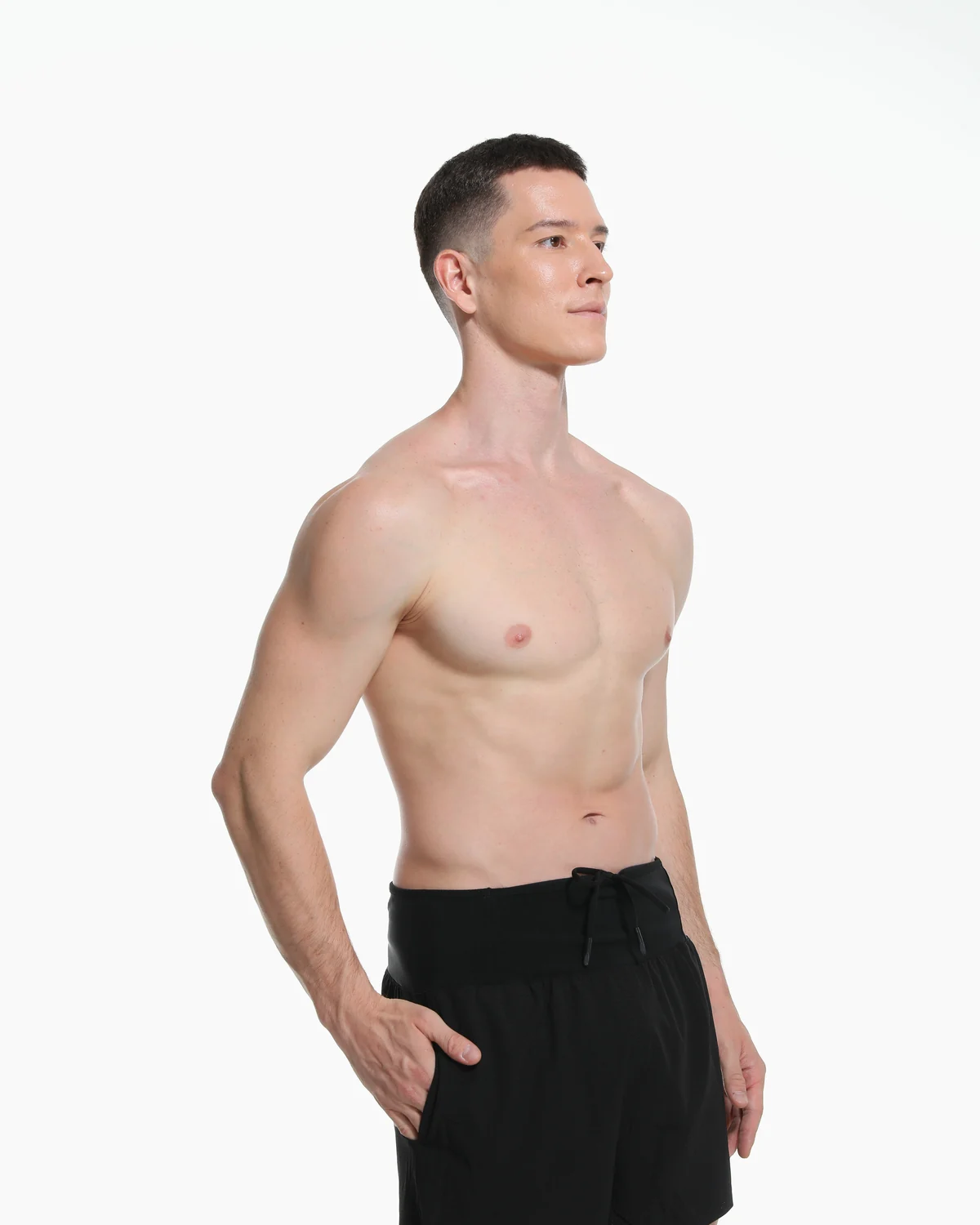
Inseam is the distance from the crotch seam to the hem, measured along the inside of the leg. It is not the outseam, and it is not the leg opening.
Two shorts can share a 3 inch inseam and fit differently. Rise, leg opening and side seam angle all change where the hem sits mid-stride. That is why a custom running shorts manufacturer treats the number as a starting point, not a specification.
2, 3 and 5 Inch Inseam Compared
The table sets the three standard lengths against what each one forces you to decide.
| Attribute | 2 inch | 3 inch | 5 inch |
|---|---|---|---|
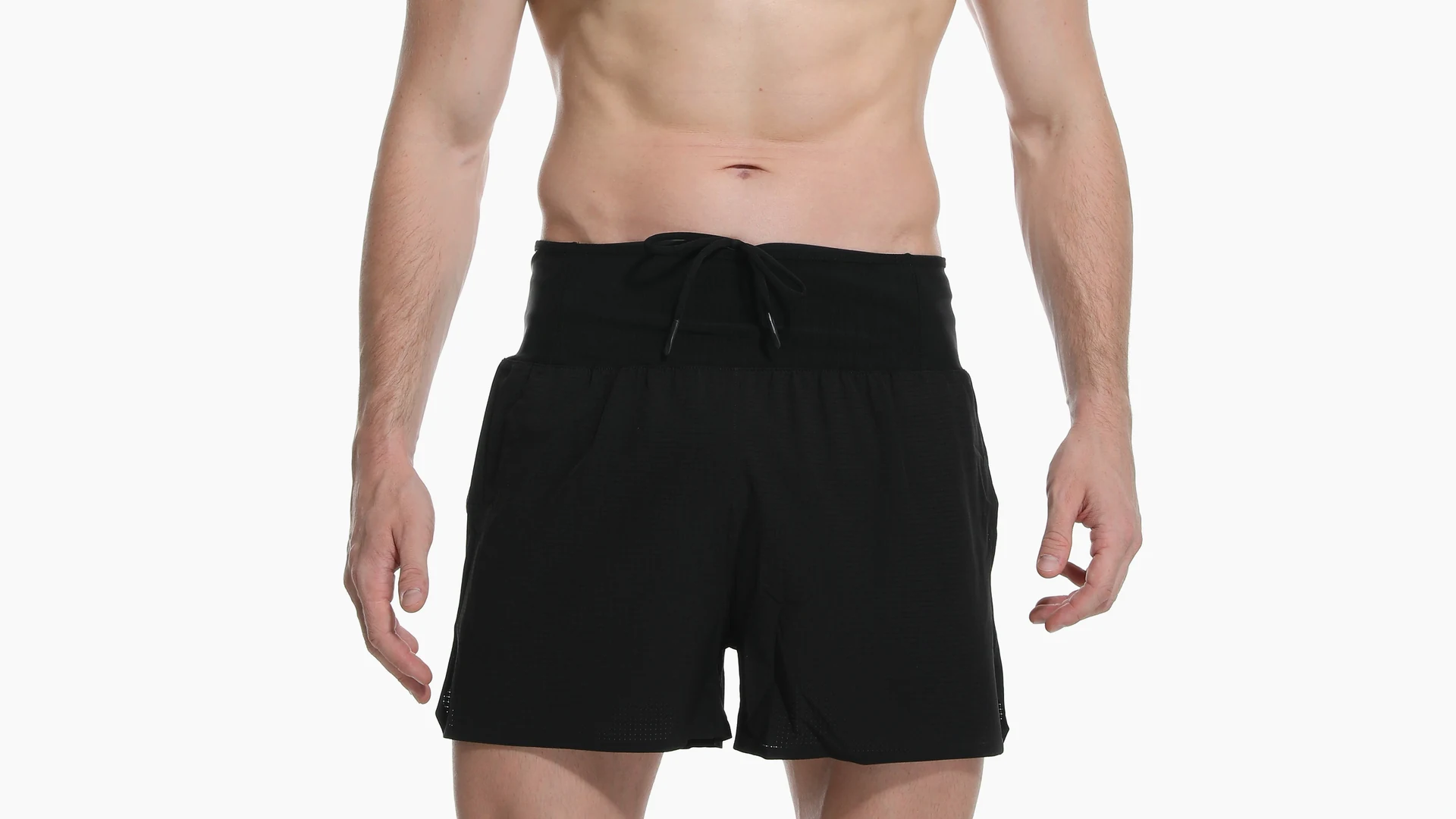
| Thigh coverage | Upper thigh only, hem sits high | Mid-thigh through most of the working range | Lower thigh, closest to a training short |
| Best fit for | Race day, track sessions, warm conditions | Club training, mixed-ability groups | Retail ranges, gym crossover, cooler conditions |
| Liner | Built-in brief, or none for elite use | Brief liner or short compression liner | Brief liner, or loose with no liner |
| Storage | Flat key pocket at most | One zip rear pocket plus one small side pocket | Two side pockets, one phone-capable |
| Hem finish | Curved or split hem | Straight hem, optional side split | Straight hem, double-turned or bonded |
| Main construction risk | Rides up if the rise is too short | Lowest risk of the three | Hem catches above the knee at full stride |
Read the last row carefully. A 5 inch short can catch at the knee if the leg opening is narrow; a 2 inch short can lift if the rise is short.
How Each Length Changes the Cut
Each length changes more than the hem line, which is why a custom running shorts manufacturer patterns them separately instead of trimming one block. The differences land in the waistband, the vent and the print zone.
The 2 inch split short
Race shorts trade coverage for freedom. The side split, a short vent at the outer seam, lets the leg open without the hem dragging. With little fabric to hide behind, the waistband and liner carry the structure.
Keep panels minimal, because large print blocks distort when the split opens. Artwork should stop above the vent line, and a custom running shorts manufacturer will usually raise the rise to stop the hem lifting.
The 3 inch training short
Three inch is the compromise most clubs land on: enough coverage for a training week, short enough to stay out of the way at pace. It also has the most usable print zone, since the side panel clears the split.
A brief liner usually makes sense here, and one zip pocket can be added without the short pulling to one side.
The 5 inch retail short
Five inch behaves like a training short rather than a race short. It suits gym crossover, cooler conditions, and buyers who want one style for running and general training.
It gains most from a phone pocket, which demands a firmer waistband and a support panel so the pocket does not sag. A double-turned or bonded hem holds shape; a plain overlocked hem can roll after a season of washing.
What Teams Actually Order
Orders cluster into three patterns that map onto who is buying, which is why a custom running shorts manufacturer sees the same requests across markets.
Clubs and race organisers take one length as standard and a second as an option. A 3 inch short for training with a 2 inch for race day is the most common pairing a custom running shorts manufacturer is asked to build, because the kit stays recognisable and a custom running singlet can share the colourway.
Brands building a range rarely launch on one length: a 5 inch and a 3 inch cover most of the market, and the 2 inch follows. Corporate buyers lean toward 5 inch, because it photographs consistently across a mixed group.
If you are unsure, order the 3 inch first. It produces the fewest size exchanges and extends into a second length later from the same block.
Liners, Pockets and Storage
The liner follows the inseam more tightly than most buyers expect. A custom running shorts manufacturer builds it into the pattern rather than adding it at the end, because the liner is what holds a minimal short in place.
A 2 inch short without a liner tends to move; a 5 inch short with a heavy compression liner can feel like two garments fighting. Match the liner to the length, not to preference alone.
| Inseam | Liner that works | Storage that fits | Storage to avoid |
|---|---|---|---|
| 2 inch | Built-in brief, or none for elite use | Flat key pocket inside the waistband | Side pockets, phone pockets |
| 3 inch | Brief liner, or short compression liner | One zip rear pocket, one small side pocket | Two large side pockets |
| 5 inch | Brief liner, or no liner | Two side pockets, one phone-capable | Rear zip pocket on a low-rise waist |
Accessories deserve the same attention. Drawcords, elastic, heat-transfer labels, zip pulls and care labels are five separate categories, each with its own lead time. The running accessories range shows how they pair with finished garments.
Fabric, Waistband and Hem Details That Age With the Length
Shorter shorts take more stretch per centimetre, so a knit that performs at 5 inch can feel thin at 2 inch. A 2 inch short also needs a deeper, firmer waistband, while a 5 inch short can use a softer band.
Seam choice follows the same logic. Flatlock joins sit level against skin and suit the inner thigh of a 2 inch short, where an overlocked ridge would rub. Overlock stays practical on outer panels where bulk is hidden.
Because a single custom running shorts manufacturer builds all three lengths, changes to the shared block — rise, leg opening, gusset depth — should be agreed once rather than per length.
How to Write the Inseam Into a Tech Pack
A length written as “3 inch” is ambiguous. Specify the measurement points and the tolerance, or the sample arrives at whatever the pattern maker treats as standard.
At minimum, record the inseam per size, the leg opening, the front and back rise, the waistband depth and the hem finish. State whether the measurement is flat or on the body, and attach a reference garment if one exists.
Selecting a new custom running shorts manufacturer is easier with that reference in hand, because a physical short removes more ambiguity than a page of numbers.
Artwork placement belongs in the same document: print zone on the side panel, logo position on the left hem, maximum print height. If the kit needs a top, a custom sports t-shirt built from the same measurements keeps fit consistent across the set.
Sampling, Minimums and Lead Times
Sampling is where the length decision gets tested. Ask for the sample in the size your median buyer wears, then run in it.
As a custom running shorts manufacturer we start from one piece, sample in 5–7 days and ship bulk in about 15 days after approval. Every order passes eight production processes from cutting to packing.
Printing moves timelines more than anything else. Eight print methods are available: sublimation holds detail across a full panel, while heat transfer suits a single logo on a dark ground.
Capacity is not the constraint. The factory runs 3000+ m² with 100+ workers, more than 10 years of garment experience and annual sales above 20 million, backed by 1000+ original designs for panel and colour direction.
Mistakes That Show Up After the First Order
Most inseam problems appear in the second order, because the first sample was checked standing still.
Watch for a 2 inch short on a standard rise, which rides up as the knee lifts. Watch for a 5 inch short with a narrow leg opening that catches at full stride. And watch for one inseam graded without adjusting the leg opening, leaving larger sizes tight at the hem.
That last one is a pattern problem, not a sewing problem, and it will not correct itself in bulk. If the programme includes cooler-weather kit, also check how the shorts sit under a custom sports jacket, and whether compression tights replace the liner.
A custom running shorts manufacturer that asks for the size run before quoting will not leave you correcting grading in season two.
FAQ: Custom Running Shorts Inseams
Which inseam do most running clubs order?
Three inch, in most cases — the length a custom running shorts manufacturer is asked for most often. It works across mixed-ability groups and carries the widest print zone. Clubs adding a race-day option usually add 2 inch.
Is a 5 inch inseam too long for racing?
Not necessarily. Five inch suits longer distances, cooler conditions and runners who want coverage. Where it fails is a narrow leg opening that catches above the knee.
Can I order two inseams in the same style?
Yes. Both come from one pattern block, so colourways, prints and trims stay identical while each length keeps its own size run.
Does the inseam change how sizes are graded?
It should. A custom running shorts manufacturer grades the leg opening per size, or larger sizes end up tighter at the hem. That is a pattern decision, not a sewing adjustment.
What is the minimum order for custom running shorts?
One piece. A custom running shorts manufacturer working at that quantity still samples in 5–7 days and ships in about 15 days, so a single pair is a practical way to test a fabric and a length first.
Can you match a short I already sell?
Yes, with a physical reference and the measurements you want held. Garment plus inseam, leg opening, rise and hem finish is what any custom running shorts manufacturer needs to match a pattern.
If you want the length settled before you commit to a size run, send a reference short and your target range. We will reply with an inseam recommendation, a panel layout and a sampling date. Start with the contact form, or browse the custom sports shorts range and the production gallery.